

Market Intelligence
Coconut Grove and the New Geography of Capital
By Flavia Arruda Salinas · June 26, 2026
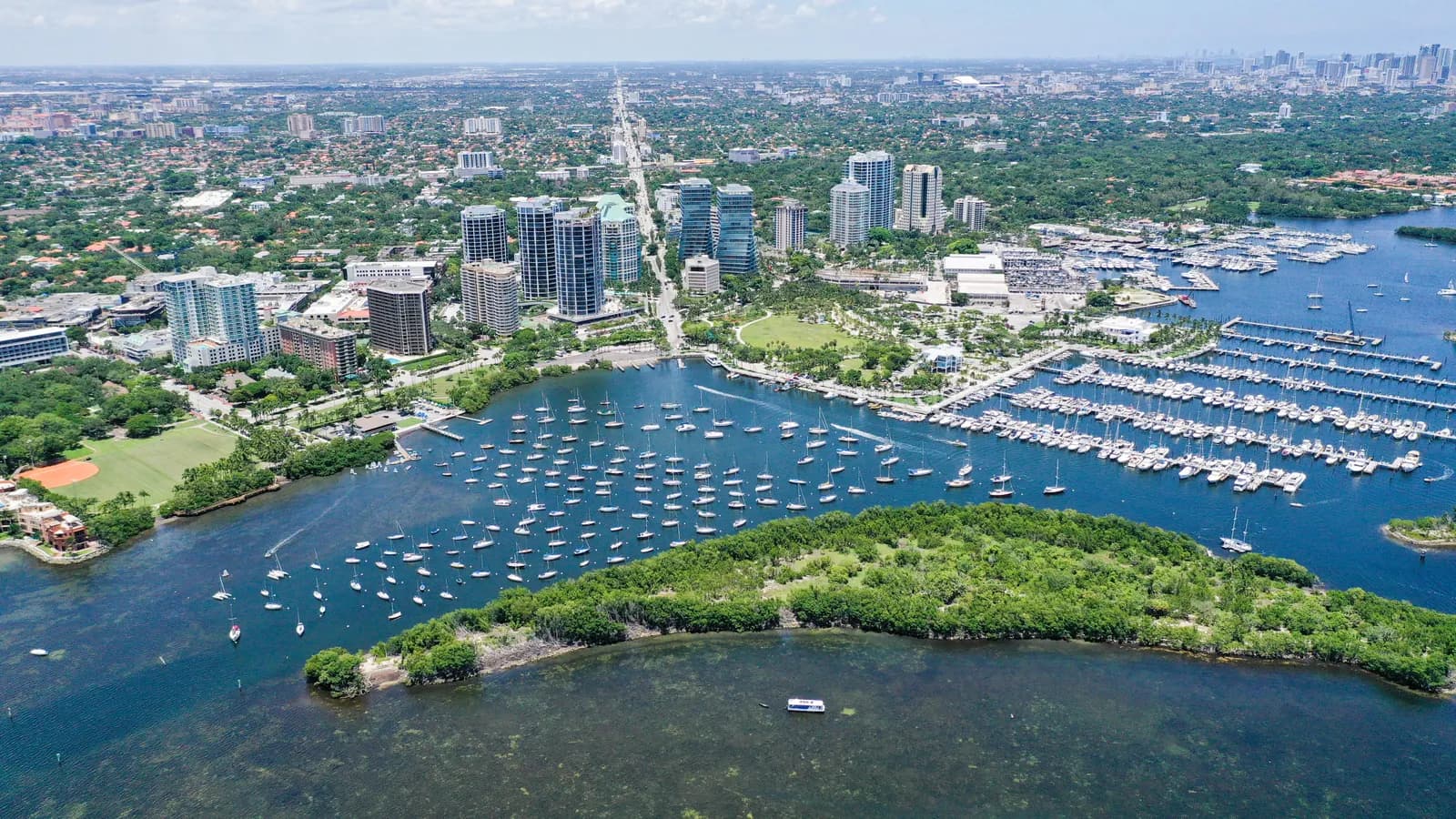
Downtown Coconut Grove and Dinner Key Marina, photographed in 2019; resized for the site. · Anthony Quintano · CC BY 2.0
Few Miami neighborhoods tell the story of the last six years as clearly as Coconut Grove. Once known mostly for its bohemian, tree-shaded calm, the Grove has quietly become one of the most concentrated landing points for global capital in the United States.
The numbers are striking. According to appraisal firm Miller Samuel, as reported by The Wall Street Journal, the median price of a single-family home in Coconut Grove reached $2.35 million in the fourth quarter of 2025, up from $995,000 in the same quarter of 2019. In six years, the typical Grove house has more than doubled.
When the world's largest fortunes choose a zip code
The headline buyers explain part of that move. The Wall Street Journal reported (February 2026) that Google co-founder Larry Page has assembled roughly $188.4 million across three Coconut Grove properties since late December. He joins a roster that already includes hedge-fund founder Ken Griffin, whose $106.875 million purchase in 2022 set a Miami record, and Inter Miami co-owner Jorge Mas, who paid close to $100 million for a waterfront lot.
These are not seasonal purchases. They are long-horizon commitments to a single neighborhood, and, by extension, to South Florida as a permanent center of wealth rather than a winter address.
When the largest pools of capital in the world start treating a neighborhood as a place to stay, the whole market around it re-prices.
What it means if you are buying
It is tempting to read these transactions as a signal to move fast, or as proof that any property in the area is a guaranteed store of value. Neither conclusion is safe.
Concentrated, ultra-high-end buying compresses supply at the top and lifts comparable values beneath it. That can be an opportunity, equity that compounds in a neighborhood with durable demand, but it also widens the gap between a fair price and an emotional one. In a market moving this quickly, the risk is rarely that you miss the deal. The risk is that you overpay for the wrong asset, or inherit a problem the headline price obscured.
Why due diligence matters more, not less
A rising market hides flaws. Title questions, unpermitted work, flood and insurance exposure, association finances and the real terms of a contract all become easier to overlook when prices are climbing and buyers feel they must act now. They do not become less expensive to ignore. They become more.
For the international clients I work with, the discipline is the same one that protects any serious purchase:
- Understand the comparable, not just the trophy. A record-setting waterfront sale tells you little about a two-bedroom inland condo three streets away.
- Read the contract before the market reads it for you. Assignment rights, contingencies and delivery terms decide outcomes long after closing.
- Price the carrying cost. Insurance, taxes and association dues in a re-pricing neighborhood can move faster than the headlines about it.
- Structure ownership early. Coordinating an attorney and a CPA before you sign aligns ownership and taxation with your goals, especially across borders.
Capital migration is real, and Coconut Grove is one of its clearest expressions. But a neighborhood the world wants is not the same thing as a property that is right for you. The advisor's role, my role, is to keep those two questions separate, and to make sure the second one is answered with the same rigor the headlines reserve for the first.
Market data is presented as reported by the cited sources and reflects specific time periods; figures are subject to change and do not constitute an appraisal, investment advice or a guarantee of future value. Individual property values vary.