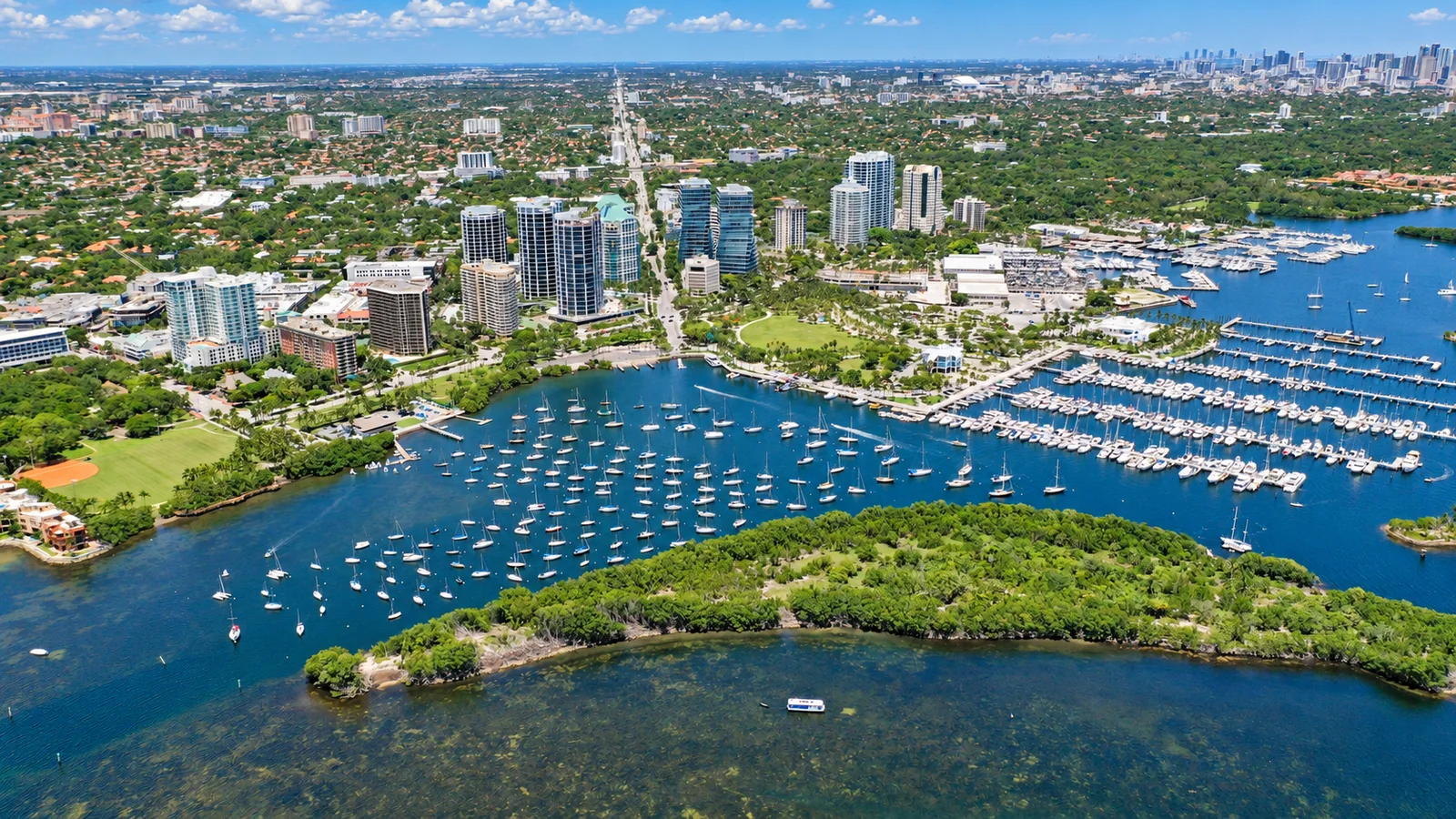
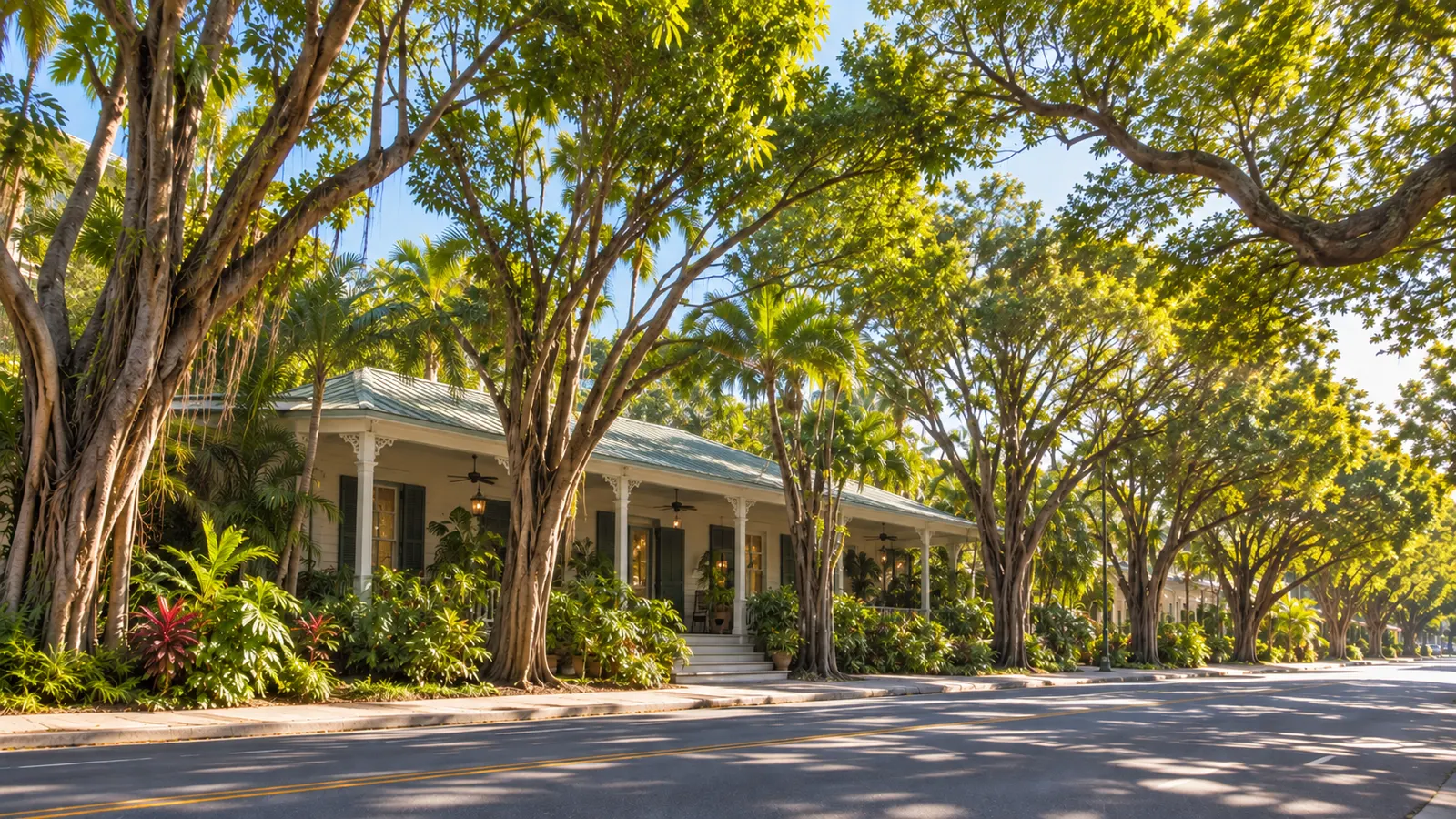
Coconut Grove's settlement history predates the incorporation of the City of Miami. Black Bahamian settlers helped shape the historic West Grove, and maritime roots remain visible in the marinas, bayfront parks and historic properties. Bahamian-influenced cottages, mid-century houses, tropical modern homes, townhouses and recent condominium towers coexist under a mature tree canopy.
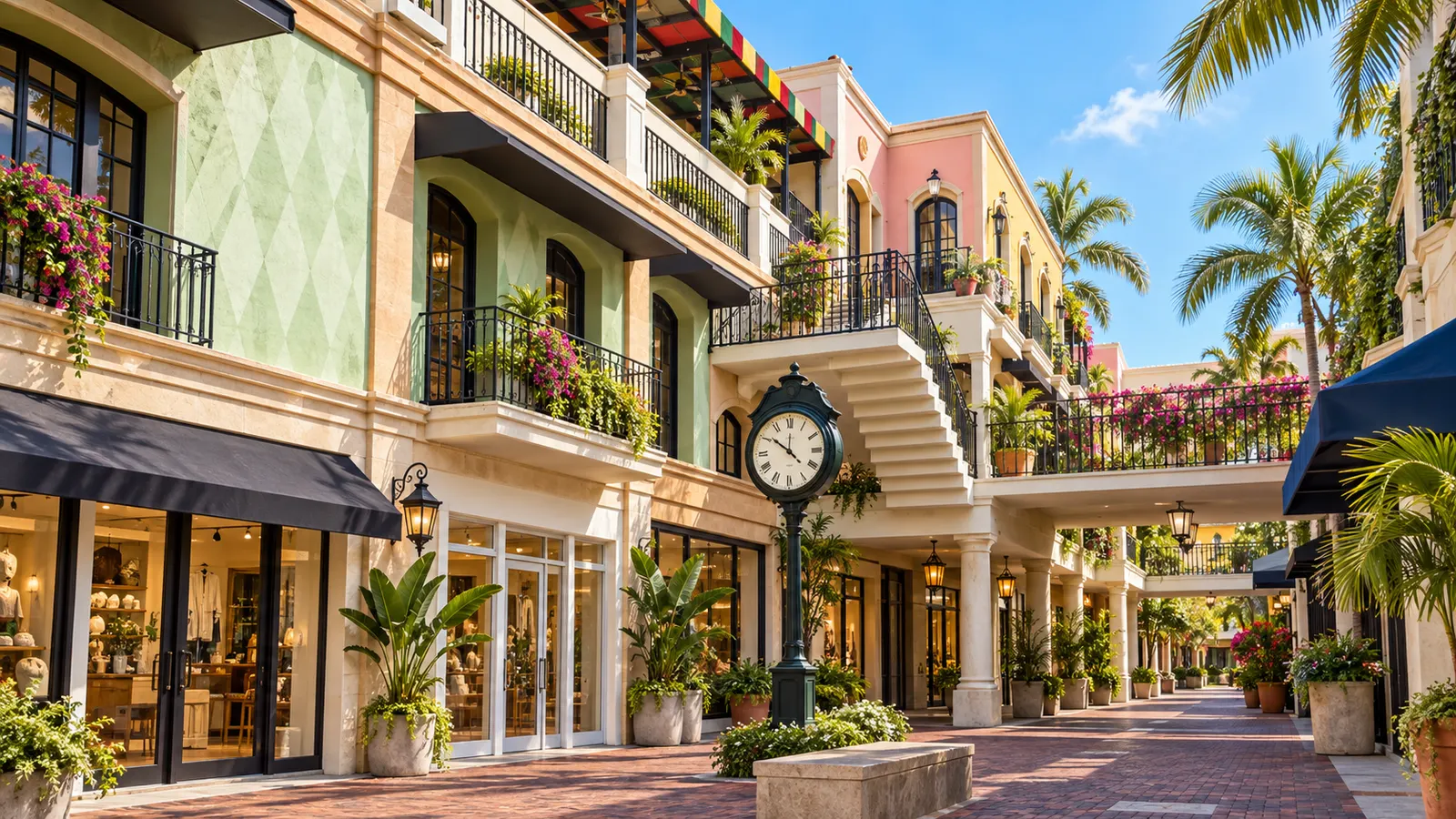
CocoWalk, renovated and reopened after redevelopment, and the village center concentrate restaurants and retail. Peacock Park occupies the bayfront site associated with the nineteenth-century Peacock Inn. The city reports 587 wet slips and more than 250 moorings at Dinner Key Marina. The Barnacle, the nineteenth-century home of sailor and boat designer Ralph Munroe, and the Coconut Grove Arts Festival, founded in 1963 and held around Presidents' Day weekend, add history and culture; Vizcaya is nearby. The real estate map changes quickly between bayfront, village and inland streets; lot condition, historic context, elevation, renovation scope, marina relationship and nearby development all deserve separate review.
Black Bahamian sailors and laborers settled here in the 1880s and 1890s, shaping historic West Grove. Ralph Munroe was a naturalist, yacht designer and one of the Grove's founding residents. Peacock Park takes its name from the 1880s Peacock Inn, often cited among Greater Miami's first hotels. CocoWalk's redevelopment revived it after a period of decline; the Coconut Grove Arts Festival, held every Presidents' Day weekend, remains one of the area's longest-running signature events, and Dinner Key Marina is among the Southeast's largest municipal marinas.